
The Curious Case of Jesus Christ
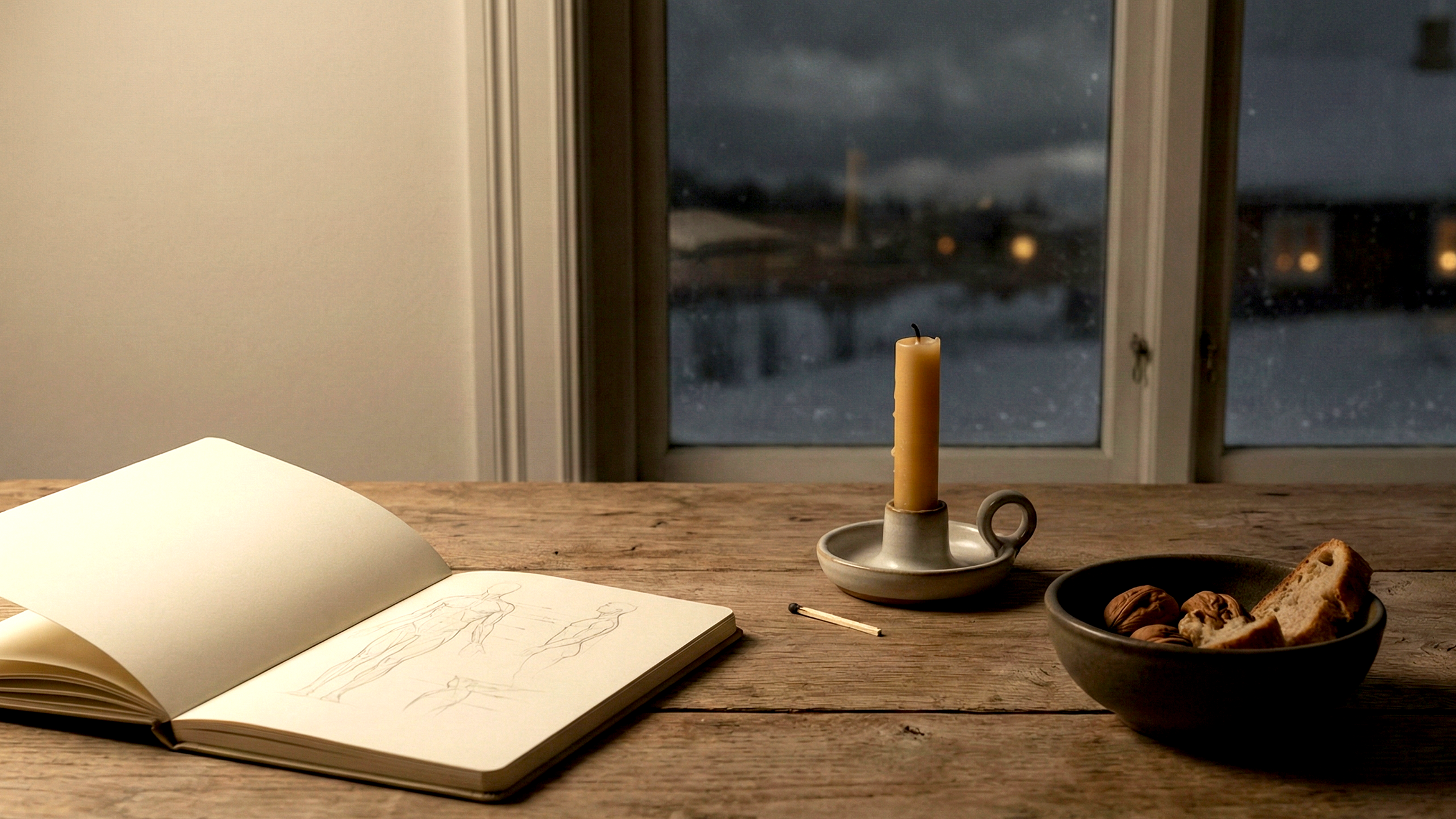
A reflection on virgin births, biological reality, and why we gather anyway.
Before we get anywhere near theology, it helps to start with biology. This is not evasion. It is simply the proper order of operations. If someone makes a claim about the physical world, we examine it with the tools designed for that purpose. Reverence can wait its turn.
Parthenogenesis is a form of reproduction in which an embryo develops from an unfertilised egg. No sperm involved. No romantic subplot. The word comes from the Greek parthenos meaning virgin and genesis meaning origin, which already tells you something about how long humans have been fascinated by the idea. Nature, it turns out, shares the fascination. Certain insects, reptiles, fish, and birds reproduce this way, sometimes as a survival strategy when mates are scarce, sometimes as their standard operating procedure. In these species, the genetic architecture permits development from a single parent’s contribution. The offspring are not miracles. They are simply working with a different manual.
Humans, however, are not on that list.
In human biology, normal development requires genetic input from both a mother and a father. This is due to genomic imprinting, a process by which certain genes are chemically tagged and switched on only if they arrive from a specific parent. Some genes must come from the father to function. Others must come from the mother. Without this dual contribution, development fails. When parthenogenesis-like events occur in human tissue, and they do occur in the form of ovarian teratomas and other growths, the result is never a baby. It is non-viable tissue, serious pathology, or pregnancy failure. There are no verified medical exceptions. Not one. Not ever.
So if we ask the question strictly in biological terms, was Jesus Christ a curious case of parthenogenesis, the answer is unambiguous.
No.
But here is the more interesting observation. That is not what the biblical texts are claiming. Not really. Not if you read them as the historical documents they are, rather than as medical records filed under obstetrics and miracles.
The virgin birth appears explicitly in the Gospel of Matthew and the Gospel of Luke. It is absent from the Gospel of Mark, generally considered the earliest of the synoptic gospels. It is absent from the letters of Paul the Apostle, which are the earliest Christian writings, documents composed closer to the events they describe than any of the gospels. Paul, who spills considerable ink on Christ’s death and resurrection, on salvation and grace and the transformation of the believer, says nothing about the circumstances of Jesus’s birth. Nothing. The silence is deafening, and historians have noticed.
What this pattern tells us is that the virgin birth narrative emerges later and serves a theological purpose rather than a biological one. It is a meaning-making device, not a medical claim.
This should not surprise us. In the ancient Mediterranean world, extraordinary births were a recognised literary convention. They signalled significance. They told readers this person matters, pay attention. Romulus and Remus, suckled by a wolf. Perseus, conceived when Zeus visited Danaë as a shower of gold. Alexander the Great, whose mother Olympias claimed divine paternity with rather suspicious timing. The pattern is everywhere. When you wanted to say that someone was destined for greatness, you gave them an unusual origin story. The virgin birth fits this template precisely. It is a theological statement dressed in biographical clothing. This child comes from God, belongs to God, and matters in ways ordinary children do not.
For believers, the story expresses divine intention and cosmic significance. For historians, it reflects how early Christian communities constructed meaning around their central figure. For scientists, it is not a claim about biology at all, or if it is, it is a claim that fails on its own terms.
The question is what we do with this layered understanding.
One option is compartmentalisation. Many modern believers manage to hold scientific literacy and religious faith in separate mental chambers, taking each out when contextually appropriate. On Sunday, the virgin birth is a sacred mystery. On Monday, in the biology classroom, human reproduction works exactly as the textbooks describe. The two never meet for coffee.
I find this approach unsatisfying, though I understand its appeal. It allows social peace and personal continuity. It does not require anyone to choose, and choosing is uncomfortable. But there is something evasive about it, a refusal to let ideas have consequences, to follow thoughts where they lead.
A sharper approach is to acknowledge that these are genuinely incompatible claims and to make a choice. If human parthenogenesis does not produce viable offspring, and it does not, then the virgin birth did not happen as a biological event. Full stop. This does not require hostility toward Christians or contempt for tradition. It simply requires honesty about what we know and how we know it. Chromosomes do not behave differently on special occasions. Physics does not pause for narrative convenience. The universe, as far as we can tell, does not make exceptions to its operating rules, not even for compelling characters. This is not a loss. It is a clarification.
And here is where the clarification becomes genuinely interesting rather than merely deflationary.
We still gather.
Regardless of belief, regardless of whether one considers Jesus divine, historical, mythical, or some complicated amalgam, many of us still come together at the end of December. Families convene. Food is prepared with more care than usual. Lights are strung against the darkness, literal darkness, the longest nights of the year. We exchange gifts, raise glasses, tell stories, tolerate relatives we carefully avoid the other eleven months.
This tradition long predates Christianity. The winter solstice has been marked by human celebrations for millennia. Saturnalia. Yule. The birthday of Sol Invictus, the unconquered sun. When early Christianity needed a date for Christ’s birth, the gospels provide none, it wisely chose a slot already occupied by festivities. Meet people where they are. The strategy worked.
What this means is that the mid-winter gathering does not depend on any particular metaphysical claim. It does not require virgin births or resurrections or divine paternity. It does not require belief at all. It requires only the recognition that winter is dark, that humans are social, that warmth is better shared, and that a good meal elevates the spirit in ways that need no supernatural explanation.
We gather because gathering is what humans do when the world turns cold. We feast because scarcity is better met with abundance, at least symbolically, at least once a year. These impulses are older than any organised religion and will outlast them all.
So let us raise a glass to clarity.
Science stays intact. The mechanisms of human reproduction are what they are, elegant and complex and entirely uninterested in theological preferences. History stays interesting. The development of religious narrative, the borrowing and adaptation of stories, the human need to find significance in existence, all of this is worth studying, worth understanding, worth appreciating as the remarkable cultural achievement it is. And winter is still better faced together.
Not because of parthenogenesis. Not because biology briefly suspended its rules two thousand years ago in a provincial corner of the Roman Empire. But because humans have always marked the darkest days with warmth, company, and a decent meal. Because meaning does not require miracles. Because wonder is available to those who pay attention to what is actually happening, which is strange and beautiful enough without embellishment.
The curious case of Jesus Christ turns out to be the curious case of humanity itself. Creatures who tell stories, build traditions, find reasons to gather, and somehow muddle through the darkness until the light returns.
Merry Christmas.
Happy Solstice.
